
McIlroy Warns PGA Tour Against Sacrificing Tradition for Short-Term Money
Authored by freebet.icu, 17 Jun 2026
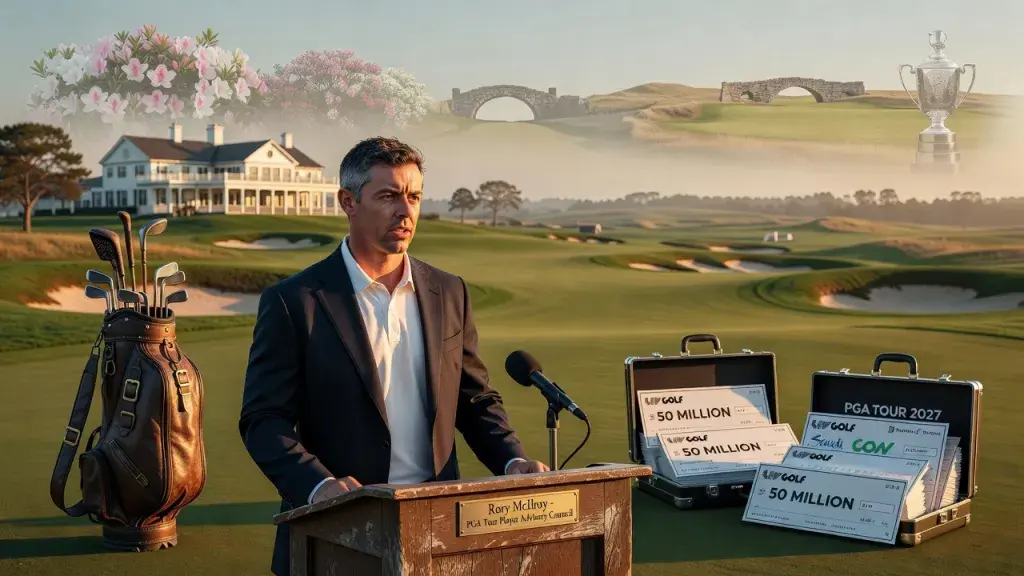
Rory McIlroy arrived at Shinnecock Hills on Tuesday carrying more than just the weight of a second U.S. Open title in his sights. With six major championships already to his name, the Northern Irishman used his pre-tournament press conference to deliver a measured but pointed assessment of where professional golf is heading - and what it risks losing along the way. His remarks came just days after the PGA Tour outlined its planned two-track structure for 2027 and beyond, and they carried the authority of a man who has spent the last several years at the centre of the sport's most turbulent period.
McIlroy's concerns were focused squarely on how events will be assigned within the Tour's new framework. His worry is straightforward: that tournaments with deep roots in the sport - events like the Canadian Open, which he has won - could be relegated to the second track simply because their sponsors cannot match the financial firepower of newer, corporately backed tournaments. "Track 2 is a glorified Korn Ferry event, that's just what Track 2 is going to be," he said plainly. "I don't think the Canadian Open should be one of those." It is the kind of blunt framing that only someone with his standing in the game can deliver without it being dismissed. The question of whether tradition can hold its ground against a $30 million cheque is not unique to golf, of course - it echoes debates across sport about what gets preserved and what gets priced out, much like the broader conversations happening in will alibaba be the first company to have an ai model hit 1550 on chatbot arena in 2026? recent news -site:kalshi.com -site:polymarket.com about which institutions ultimately set the pace when money and legacy collide.
On the subject of prize money, McIlroy offered a perspective that few inside the Tour's corridors of power are likely to repeat publicly. He acknowledged that the surge in purses - signature events now carrying $20 million - was a necessary response to LIV Golf's arrival and its ability to lure players with guaranteed money. But with LIV's influence visibly fading, he argued that the PGA Tour should resist the temptation to maintain those inflated figures as a permanent fixture. "LIV created this false economy," he said, "where we had to up prize funds and had to cut fields and try to support top players and all of that." His point was not that players should be paid less, but that chasing unsustainable numbers could distort the Tour's structure in ways that outlast the rivalry that made them necessary in the first place.
The Tradition Question at the Heart of the Two-Track Debate
Golf is unusual among major sports in the weight it places on history. Augusta National, St Andrews, Shinnecock Hills itself - these venues mean something that no amount of prize money can replicate overnight. McIlroy appears genuinely concerned that the PGA Tour, in building its new architecture, risks applying a logic that measures an event's worth almost entirely through its commercial yield. If that becomes the primary criterion, long-standing tournaments that cannot attract eight-figure title sponsorships will slide down the ladder regardless of what they represent to the sport's history. The Canadian Open, the Australian Open - events McIlroy has been publicly committed to supporting - are precisely the kind of tournaments that could find themselves squeezed.
A Champion's Perspective on Playing Less, Thinking More
There was a telling aside in McIlroy's press conference. He noted that his own schedule is "getting less and less as the years go on" - a quiet acknowledgement that, at 36, he is increasingly selective about where he commits his time. That selectivity, though, has not dulled his engagement with the bigger picture. He was at the Australian Open earlier this year for the first time in over a decade and has committed to returning in 2026, ahead of the PGA Tour's formal partnership with Golf Australia and the DP World Tour from 2027. His advocacy for national opens beyond the two that carry major status speaks to a broader philosophy: that the Tour's global credibility depends on more than marquee events in the United States.
What McIlroy's Warning Actually Means for the Tour
The PGA Tour has publicly maintained that sponsorship appetite remains strong enough not only to sustain current purse levels but to grow them. McIlroy is not directly contradicting that claim, but he is questioning whether chasing that growth at the expense of structural integrity is the right call. His argument is essentially that the Tour stumbled into a version of the same mistake it accused LIV of making: prioritising money over meaning. The irony he identified - that the pre-LIV Tour "was actually pretty good" - is likely to sit uncomfortably with those who spent the last four years insisting that sweeping reform was unavoidable. At Shinnecock Hills this week, McIlroy will be chasing history of his own. But his most enduring contribution to the sport's current chapter may well be the voice he continues to lend to the questions that will shape it long after the final putt drops on Sunday.