
Data Leak Exposes Peter Thiel's Secret Elite Network Dialog and Its Powerful Members
Authored by freebet.icu, 18 Jun 2026
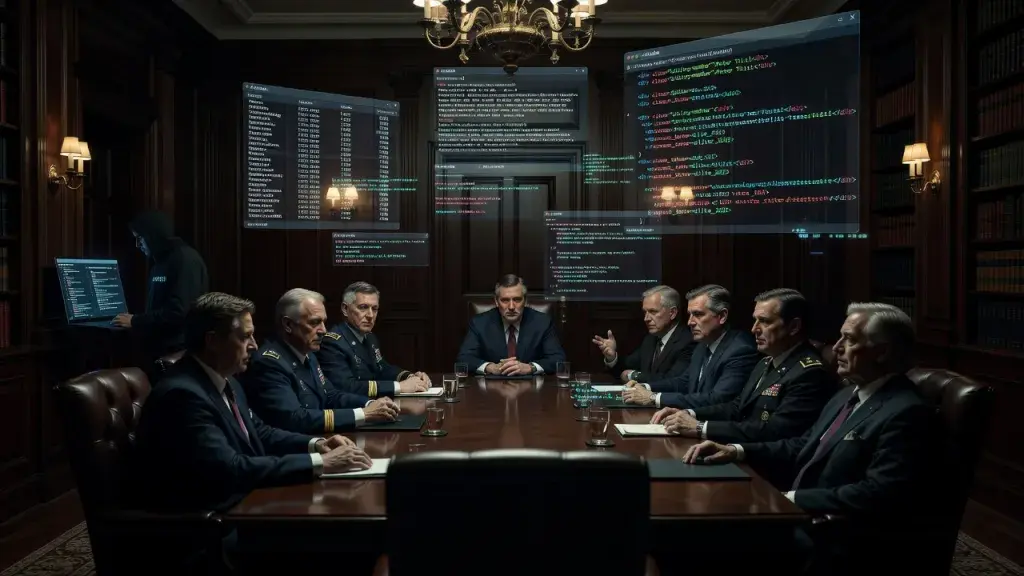
A significant data breach has revealed the inner workings of Dialog, a private, invitation-only organization co-founded in 2006 by tech billionaire Peter Thiel that has quietly gathered some of the most powerful figures in politics, finance, and Silicon Valley for two decades. American technology magazine Wired confirmed the authenticity of the leaked records, which were left exposed on the open internet and contained the names of participants alongside sensitive personal data that the group had explicitly promised would remain confidential. The breach lays bare a network whose very existence was largely unknown to the public - and raises serious questions about how power and influence operate behind closed doors in the United States.
Dialog operates with an exceptionally low public profile, organizing annual off-the-record retreats attended by senior U.S. officials, foreign government representatives, and top-tier technology executives. The organization had spent years avoiding any disclosure of its membership. Much like the way an exclusive tvbet casino operates behind closed doors with a carefully curated clientele, Dialog built its reputation on discretion and controlled access - yet the security protecting its digital infrastructure proved far less robust than the secrecy surrounding its physical gatherings. The vulnerability was discovered by Swiss hacktivist maia arson crimew, known for previous breaches involving surveillance systems and government databases, who told Wired she accessed the material after receiving an anonymous tip.
Part of the exposed records were stored on Airtable, a commercial database platform. Those files contained participants' attendance histories, personal biographies, cities of residence, and private access tokens that functioned as login credentials. More damaging still, Dialog's own membership directory was found embedded directly in the source code of its website - visible to any visitor who cared to inspect it. This represents an elementary failure for an organization that positions itself as a space for candid, protected conversation among the world's most consequential decision-makers.
A Concentration of Power Rarely Seen in a Single Room
The leaked documents reveal an extraordinary gathering of influence. Among those registered is General Alexus Grynkewich, the current Supreme Allied Commander Europe and head of U.S. European Command - one of the most senior military figures in NATO. The list also includes officials from the Trump administration, two sitting U.S. senators, six members of the so-called PayPal Mafia, a former intelligence chief for the Middle East, and a serving ambassador to the United States.
Auren Hoffman, Dialog's chairman and the founder of data companies SafeGraph and LiveRamp, appears in the same directory as Treasury Secretary Scott Bessent and Republican Senator Ted Cruz, who chairs the Senate Committee on Commerce, Science, and Transportation. Palantir co-founder Joe Lonsdale is listed alongside Army Secretary Dan Driscoll and Democratic Representative Jim Himes, a member of the committee that oversees U.S. intelligence agencies. The presence of executives and founders from leading surveillance, data brokerage, and data-driven advertising companies adds another dimension to what the membership list represents.
Agenda Items and Broken Promises of Confidentiality
The agenda for this year's retreat, as revealed by the documents, includes sessions titled "Does Money Buy Happiness?", "Bringing Back Nuclear", "Navigating World War III", "Battlefield Technologies", and "What Is Your Sex Life Like?" - alongside panels on how to "build a cult" or "create a political party." Discussions on artificial intelligence, longevity, and near-future scenarios are also scheduled. The breadth of topics reflects an organization that functions as something between a policy forum and an elite social club, with few boundaries on what its members are willing to discuss privately.
The breach also exposed a direct contradiction at the heart of Dialog's operations. Registration forms asked members about their political orientation and included an explicit guarantee that this information would "never" be shared with other participants or published on the group's app. That data was among the material left exposed. The organization also runs an internal dating platform described as a space to create "meaningful connections for exceptional people," through which members could indicate they were "looking for love" and request to be included in future matchmaking. None of that was protected. Notably, none of the public officials on the list used government email addresses to register - all opted for personal or corporate accounts instead.
Thiel's Shadow and the Bilderberg Parallel
Peter Thiel is among the most influential and deliberately opaque figures in modern technology. He co-founded PayPal in the late 1990s and became Facebook's first outside investor, a bet that cemented his status as one of the most consequential players in the global tech ecosystem. He also co-founded Palantir, a data analytics company with deep ties to U.S. defense and intelligence agencies. Throughout his career, Thiel has cultivated a reputation for operating through closed networks, private discussions, and long-horizon thinking - Dialog being perhaps the clearest expression of that approach.
The organization has frequently been compared to the Bilderberg Group, the annual gathering of Western political and business leaders that has long attracted scrutiny for its opacity. Dialog has maintained an even lower profile than Bilderberg since its founding twenty years ago. In recent months, Thiel has also drawn attention in Argentina, where he held meetings with President Javier Milei and other officials, acquired a property in the Barrio Parque neighborhood of Buenos Aires, and spent several weeks in the city with his family. The full reasons for his extended presence there were made known officially. For an organization built on the principle that secrecy is a feature rather than a flaw, the Dialog breach is a striking failure - and a reminder that no network, however powerful, is immune to the vulnerabilities of its own digital infrastructure.