
A Boxing Journalist Cuts Weight to Understand What Fighters Really Endure
Authored by freebet.icu, 20 Jun 2026
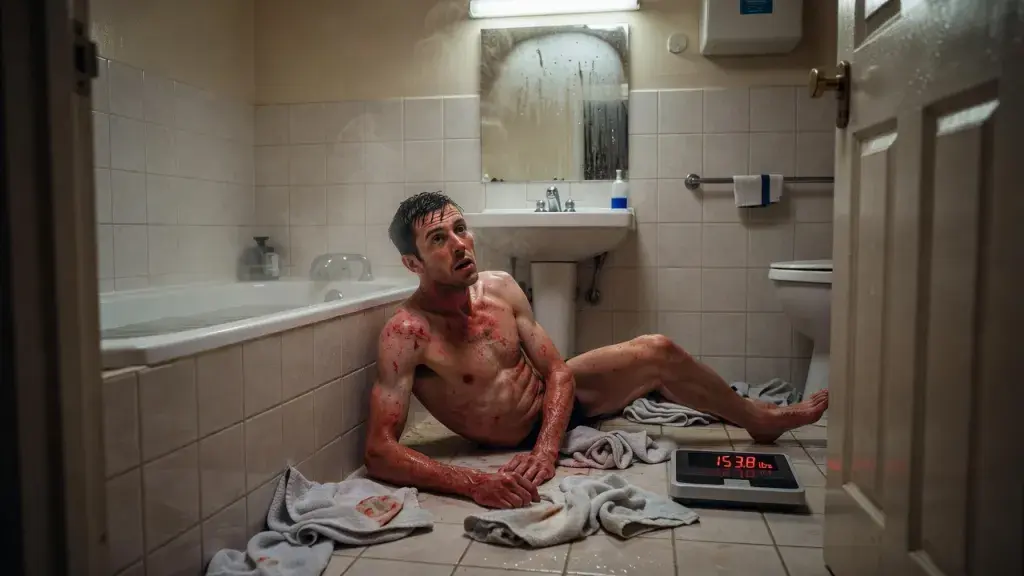
It is not how anyone would choose to spend a Friday morning - skin raw from a scalding bath, collapsed on the bathroom floor, vision narrowing toward black while a worried spouse hovers overhead with heated towels. But for a boxing journalist attempting to experience the weight-cutting process that fighters routinely undergo before a bout, this is precisely the territory the experiment leads into. The question driving it is deceptively simple: can you truly understand what a fighter goes through if you have never gone through any version of it yourself?
The premise is not unique to boxing. Sportswriters who cover rugby without having taken a tackle, or those who analyse sprinting mechanics without having trained on a track, rarely face the same challenge to their credibility. Yet in combat sports, the accusation lands with particular force and frequency. There is something about the violence and the sacrifice embedded in the fight game that makes the "you've never done it" argument feel almost reasonable - even if, logically, it carries no more weight than telling a food critic they cannot review a restaurant until they have worked a kitchen shift. For the record, you can also bet on aussie rules cyprus and follow any sport from the outside as a spectator without ever having stepped onto the oval - that has never invalidated the intelligence of the analysis. The machismo-laden gatekeeping inside boxing, however, is uniquely persistent.
The journalist at the centre of this account - a northwest London native who grew up trading Pokémon cards far more readily than punches - came to boxing through the back pages of Sunday newspapers and the candid, unfiltered personalities found in boxing magazines. Where footballers gave clipped, managed post-match answers, boxers talked. They swore. They explained fear. It was the rawness that hooked him, and the years that followed turned that fascination into a career covering fighters from regional journeymen to undisputed world champions.
The Weight-Cut: Boxing's Most Brutal and Least Visible Contest
The decision to simulate a weight cut was not made lightly, and it was not made in ignorance of the risks. Former cruiserweight world champion Tony Bellew once said openly that when he was struggling to make the 175-pound light heavyweight limit, his entire training camp was consumed by the scale rather than by boxing improvement. Former three-weight world champion Duke McKenzie has spoken about the lasting psychological scars the process leaves behind, noting that people who have never made weight simply cannot comprehend its effect.
The dangers are not abstract. In 1997, three amateur wrestlers in the United States died within the space of roughly a month - Bill Saylor, Joseph LaRosa and Jeff Reese - all while attempting to shed significant amounts of weight rapidly through extreme dehydration methods including exercising in rubber suits inside overheated rooms. In 2015, 21-year-old mixed martial artist Yang Jian Bing died in the Philippines after reportedly losing approximately 15 percent of his body weight through severe dehydration in the lead-up to a fight. He collapsed before the weigh-in and did not survive. The sport has never fully shaken these tragedies, even as some regulatory bodies have moved to introduce same-day or next-day weigh-ins to reduce the incentive for extreme cutting.
The Plan: Six Weeks, 154 Pounds, and a Weigh-In Date
The target set for this experiment was 154 pounds - the super welterweight limit - deemed appropriate for a 5-foot-11, 35-year-old frame. A six-week training camp structure was mapped out, modelled as closely as a non-professional could manage on what a contracted fighter might endure. The weigh-in date was fixed. The methodology was deliberate, supervised to a degree, and still - as the opening scene of the article demonstrates - pushed the body to a point that concerned everyone in the room, including the person lying on the bathroom floor.
What emerges from this account is not a stunt. It is a genuine attempt to close, even fractionally, the empathy gap that sits between those who report on sport and those who perform it. Whether the critic who shouts "you've never fought" from ringside is right or wrong as a matter of principle, the weight cut demands a physical reckoning that no amount of ringside observation fully translates. The journalist did not get punched. He did not spar. But the bath, the towels, the dimming ceiling panels - that, at least, is a chapter of the fighter's story that he can now claim some honest knowledge of.
Why the Story Matters Beyond One Journalist's Experiment
Combat sports journalism occupies a curious space in the media landscape. It is a beat that demands proximity to genuine human risk, and the fighters who populate it often come from backgrounds where few other doors were open. The responsibility to tell those stories accurately - and with something resembling earned understanding - is real. This experiment does not resolve the debate about whether a journalist must suffer to write with authority. But it advances it honestly, and it arrives at the bathroom floor of a real person willing to be uncomfortable in service of better storytelling. In a media environment where access increasingly substitutes for insight, that instinct is worth something.