
World Cup 2026 Opens With Drama as Hosts Lead the Way
Authored by freebet.icu, 17 Jun 2026
The 2026 FIFA World Cup is officially underway across the United States, Canada and Mexico, and the expanded 48-team tournament has already delivered goals, surprises and the kind of atmosphere only the world's biggest sporting event can generate. From Mexico City's iconic Estadio Azteca to the stadiums of Atlanta, Vancouver and Seattle, the opening days of group-stage football have set the tone for what promises to be a month-long spectacle running through to July 19.
The sheer breadth of this tournament - stretching across three nations, sixteen venues and twelve groups - has drawn comparisons to almost every other major sporting event on the calendar. While fans of niche disciplines such as those who frequent lacrosse betting sites may be accustomed to following sport across borders, even by those standards the logistical ambition of a tri-nation World Cup is something altogether different. FIFA's expanded format, bringing 48 teams into competition for the first time, ensures that confederations previously on the margins - OFC, smaller CONCACAF nations, and first-time qualifiers - now have a genuine stage.
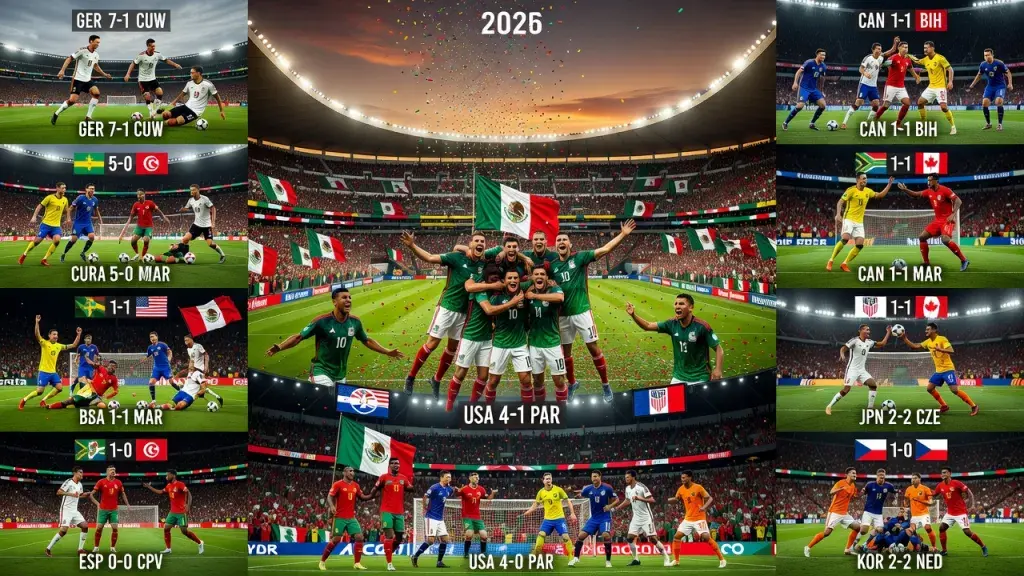
The results through the opening days have been uneven in the best possible way. Germany announced themselves with a ruthless 7-1 demolition of Curaçao, a scoreline that speaks to the gulf between established European powers and debutant sides even in this more inclusive format. Sweden, meanwhile, put five past Tunisia without reply, handing the North Africans a difficult early hill to climb. Not every heavyweight has found the same fluency: Spain, the tournament's top-ranked side, were held to a goalless draw by Cabo Verde, a result that immediately raised questions about La Roja's readiness. Argentina, the defending champions, have yet to play their opening fixture. Brazil, five-time winners and perennial contenders, drew 1-1 with Morocco in Group C - a result that flattered neither side but confirmed the Atlas Lions' continued ambition as Africa's most consistent force in world football.
The Three Hosts: Mixed Starts, High Stakes
Mexico delivered exactly what the occasion demanded. As hosts of the tournament's opening match, El Tri dispatched South Africa 2-0 at the Estadio Azteca, a ground that carries more World Cup history than almost any other on earth. The victory settled Mexican nerves after years of agonising round-of-sixteen exits, and it was backed up by Korea Republic's 2-1 win over Czechia elsewhere in Group A, setting up what could be a compelling three-way contest for progression as the group stage develops. Mexico face Korea next, at Estadio Akron in Guadalajara, a fixture that could effectively settle who leads the group going into the final round.
The United States made an emphatic statement of their own. A 4-1 win over Paraguay in Group D announced the hosts as genuine contenders in their half of the draw, not merely beneficiaries of automatic qualification. The Socceroos of Australia complicated the group further with a 2-0 victory over Türkiye, meaning Group D is already taking shape as one of the more competitive quarters of the draw. Canada, in Group B, opened with a 1-1 draw against Bosnia and Herzegovina - a point that keeps them level but leaves little room for error against Qatar and Switzerland in the matches ahead.
Africa and Asia: Early Statements and Disappointments
For the African football community, this World Cup carries unusual weight. Ten CAF nations qualified - the confederation's largest ever representation at a single tournament - and the opening results have been mixed. Morocco's draw with Brazil will be received with quiet satisfaction in Rabat, a sign of the technical progress made under their coaching structure since their historic run to the 2022 semifinals. South Africa's defeat to Mexico is a setback, though not terminal, with fixtures against Czechia and Korea still to come. Egypt's 1-1 draw with Belgium in Group G, and Côte d'Ivoire's 1-0 win over Ecuador in Group E, suggest African sides are competing with conviction rather than merely making up the numbers.
From Asia, Japan's 2-2 draw with the Netherlands was arguably the group stage's most eye-catching result beyond Germany's goal-fest. The Blue Samurai have developed a reputation for punching above their weight at World Cups and showed no signs of retreat against a Dutch side that will expect to progress. South Korea face a stern test against Mexico in their second Group A match, while Saudi Arabia's 1-1 draw with Uruguay in Group H ensures that group remains wide open.
Format, Stakes and the Road to the Final
The mechanics of this expanded tournament are worth understanding clearly. With 32 of the 48 teams advancing from the group stage - the top two from each group plus the eight best third-place finishers - even a defeat in game one does not end a campaign. But it does create pressure, and the tiebreaker sequence running through goal differential, goals scored, head-to-head results and fair play means that every match has consequences beyond the three points at stake.
FIFA's structural tweak to protect competitive integrity in the knockout rounds also adds intrigue. Spain and defending champions Argentina have been placed in separate pathways to the semifinals, as have France and England - ranked third and fourth respectively. Should all four progress as expected, the two pathway finals will serve as de facto semifinal showpieces before a final that football fans globally are already beginning to dream about. The group stage, with its surprises and statements, is merely the prologue.